

About a month ago, the USDA unveiled it's new healthy eating icon replacing the pyramid. Many medical and nutrition professionals believe it is a step in the right direction, and I would agree with them. But let me back up to explain why...
In 1992, the first pyramid was released which looked like this:
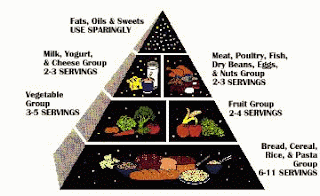
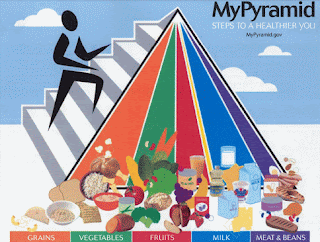 ...which was a complete disaster. This icon is totally confusing and does nothing to educate the public on making healthy choices. The website that accompanied it was useful with many interactive tools and good information, but the time it took to get to that information was a stumbling block for most Americans. Fast forward to a month ago and the new icon now looks like this...

Look familiar? If you have been to the Resort, you may remember that we have (for many years) educated guests on how to make half their plate fruits and vegetables, 1/4 whole grain and 1/4 lean protein. In essence, it follows the above recommendations. The focus on fruits and vegetables as the majority of each plate is a step in the right direction. I will say however that I would recommend getting more vegetables than fruit (which the icon somewhat conveys given the larger triangle being vegetables).
The two downsides to this plate in my opinion are 1) the addition of the glass of milk and 2) no emphasis on healthy fats.
- First off, protein sources are meat, poultry, fish, eggs, nuts, seeds, beans, soy and DAIRY products. If you are having a glass of milk (or yogurt, cottage cheese or cheese), that can be your protein. To just include an additional dairy product will add 100-200 extra calories to that already balanced meal.
- Second, adding healthy fats (olive and canola oil, avocado, nuts) to your meals will help you feel more satisfied. It may also help to decrease cravings for sweet foods, aid in visceral or abdominal fat loss, decrease risk for heart disease and help you eat less calories overall.
Taking all this into consideration, here is how I would "Choose My Plate" for breakfast, lunch and dinner:
Breakfast: Oatmeal made with milk and topped with peanut butter and banana
Lunch: Large salad (greens, tomatoes, carrots, cucumber, mushrooms, bell pepper, etc) topped with edamame, light balsamic vinaigrette with whole grain crackers on the side
Dinner: Veggie Chili topped with cheese and served with whole grain cornbread
If you go to choosemyplate.gov and click on interactive tools, you will see links for "Daily Food Plan" or "Food Planner". There you will be able to enter your weight, height, age and activity level in order to see your calorie needs and recommended servings from each of the food groups. You can then customize a plate for yourself that is well balanced.
So my question for you is, do you find this new icon helpful? Is it easier to understand than the past pyramids? Has it changed the way you eat at all?
Emily Fonnesbeck RD,CD


 Posts


1 comments:
Hi Emily!
Over all, I think the idea of using a plate is a good idea. Certainly, it is much more understandable to the average Joe but, I also find myself questioning the quality of the source. The US Department of Agriculture? I would prefer that information like this came from organizations who are primarily concerned with our health as opposed to an organization whose top priority is to sell commodities. I definitely agree with the growing focus on vegetables, however. I've been harboring growing doubts about the value of grains so I cut grains out of my diet altogether. (There is significant research to back this approach - see Gary Taubes: Good Calories - Bad Calories") Vegetables are much more packed with vitamins & minerals and supply a good dose of fiber as well with a much lower calorie count than grains. Since I cut grains out, I find my cravings much easier to resist (probably milder blood sugar swings) and portion control is easier.
Regards,
Bud Fetterley
Post a Comment